Best Practices
-

How to Generate PDFs with Playwright
Learn how to generate PDFs with Playwright for reports, invoices, and snapshots across browsers reliably.
Learn More -
How To Block Specific Resources in Playwright in 2026
Learn how to block scripts, images, and third-party requests in Playwright to speed up tests and reduce flaky failures.
Learn More -
15 Playwright Selector Best Practices in 2026
Master 15 advanced Playwright selector best practices for 2026 to prevent flaky tests, boost reliability, and scale automation with cleaner, stable locators.
Learn More -
15 Best Practices for Playwright testing in 2026
Discover the top Playwright testing practices for 2026 to improve stability, speed, scalability, and overall test quality.
Learn More -
Using Tags in Playwright
Learn how to use tags in Playwright to organize and manage your tests more efficiently, improving test suite scalability and maintainability.
Learn More -
How to Setup and Use Playwright Projects
Learn how to set up, structure, and run Playwright projects with best practices, examples, and configuration steps.
Learn More -
Understanding Playwright BeforeAll, BeforeEach, AfterEach, and AfterAll
Learn how to use Playwright’s lifecycle methods—BeforeAll, BeforeEach, AfterEach, and AfterAll—to manage test setup and teardown efficiently.
Learn More -
Why You Shouldn’t Use page.waitForTimeout() in Playwright
Learn why relying on page.waitForTimeout() causes flaky Playwright tests and discover reliable alternatives to ensure stable performance.
Learn More -
Element Not Interactable Exception in Selenium [2026]
Learn about Element Not Interactable Exception in Selenium, when it occurs, and different methods to handle Element Not Interactable Exception.
Learn More -
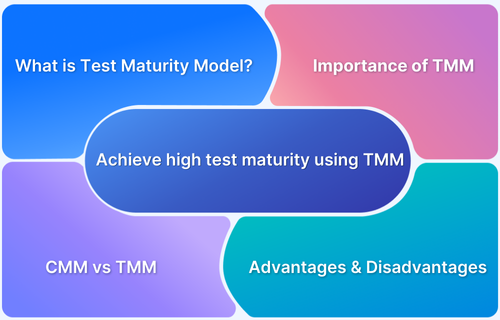
Achieving High Test Maturity with Test Maturity Model (TMM)
Explore how the Test Maturity Model (TMM) helps you elevate test maturity. Step-by-step guidance to assess and improve your testing practices for better results.
Learn More