




Browse Packs · Browse Bundles · Quick Start · Principles · Community
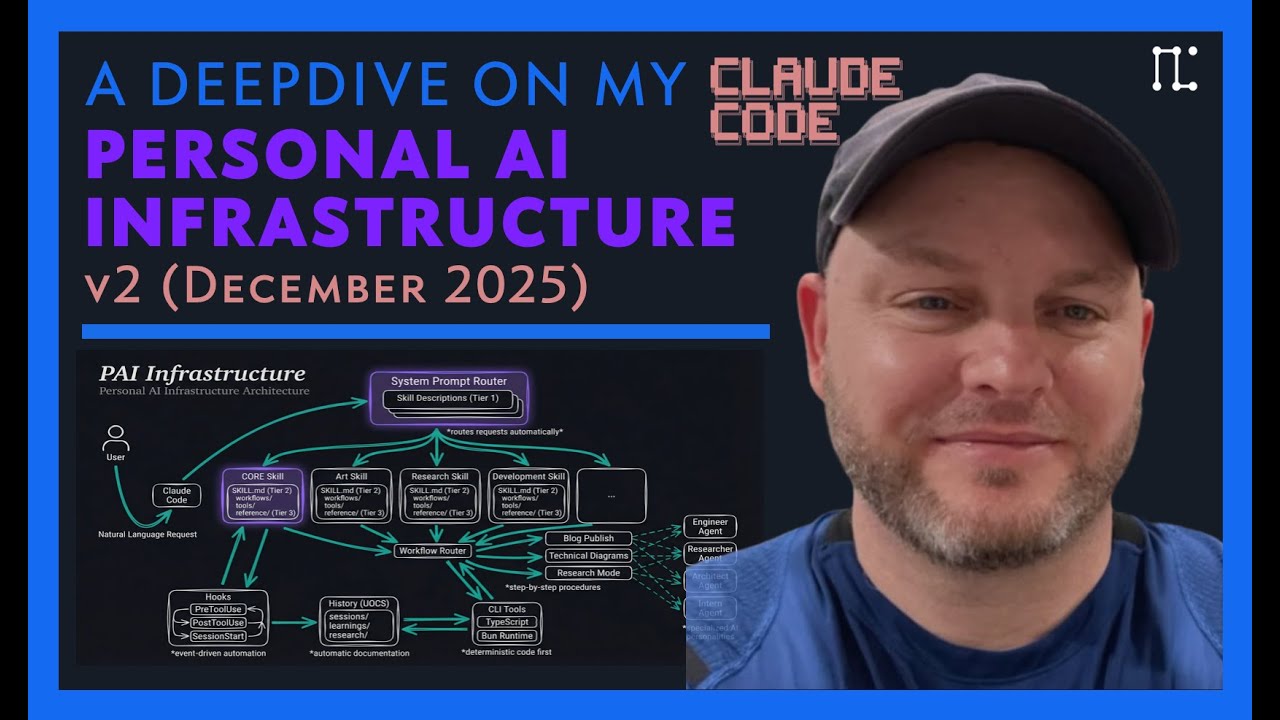
Watch the full PAI walkthrough | Read: The Real Internet of Things
Right now the most powerful AI setups are being built inside companies for efficiency and profits.
That's all good, but I think the purpose of technology is to serve humans—not the other way around. These new AI frameworks should be available to everyone, including people not in technology, so that regular people can use it to help them flourish.
That's what PAI is. It's the foundation for building a Personal AI System that understands your larger goals and context, gets better over time, and that works for you because it's yours. Not some generic chatbot. Not some common assistant. A full platform for magnifying yourself and your impact on the world.
PAI (Personal AI Infrastructure) is a framework for building your own AI-powered operating system. It's built on top of AI coding agents like Claude Code, but personalized to you - your goals, your workflows, your context.
When you build a PAI system, you're creating what I call your own "Kai" - a personalized AI assistant that knows your preferences, remembers your history, and has specialized skills for the things you do most.
PAI is:
- A philosophy - The 14 Founding Principles that guide how to build AI systems
- An architecture - Skills, Hooks, History, Agents, and MCP integrations
- A community - Open-source packs that anyone can install or contribute
These principles guide how PAI systems are designed and built:
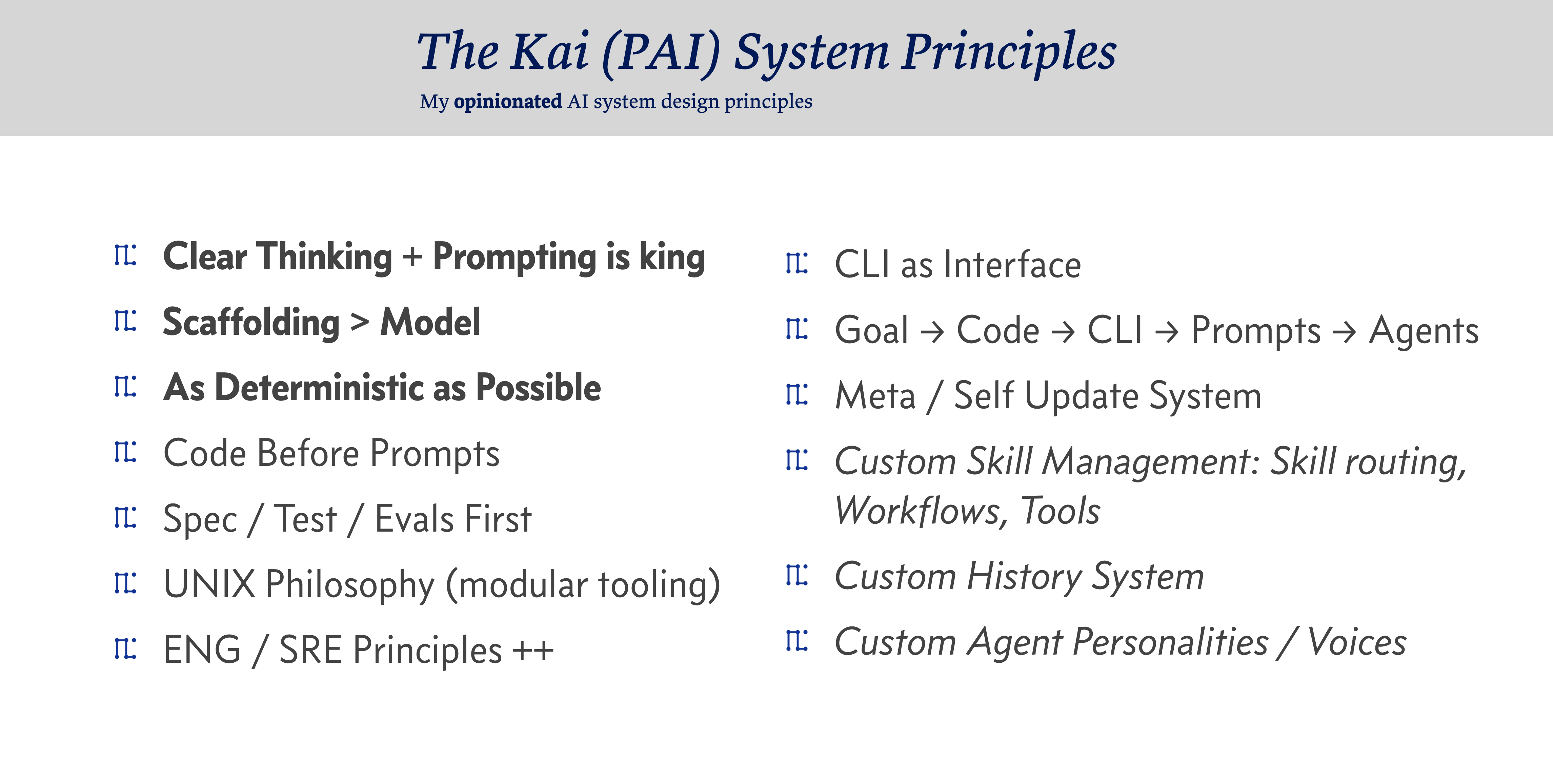
Read the full breakdown of each principle →
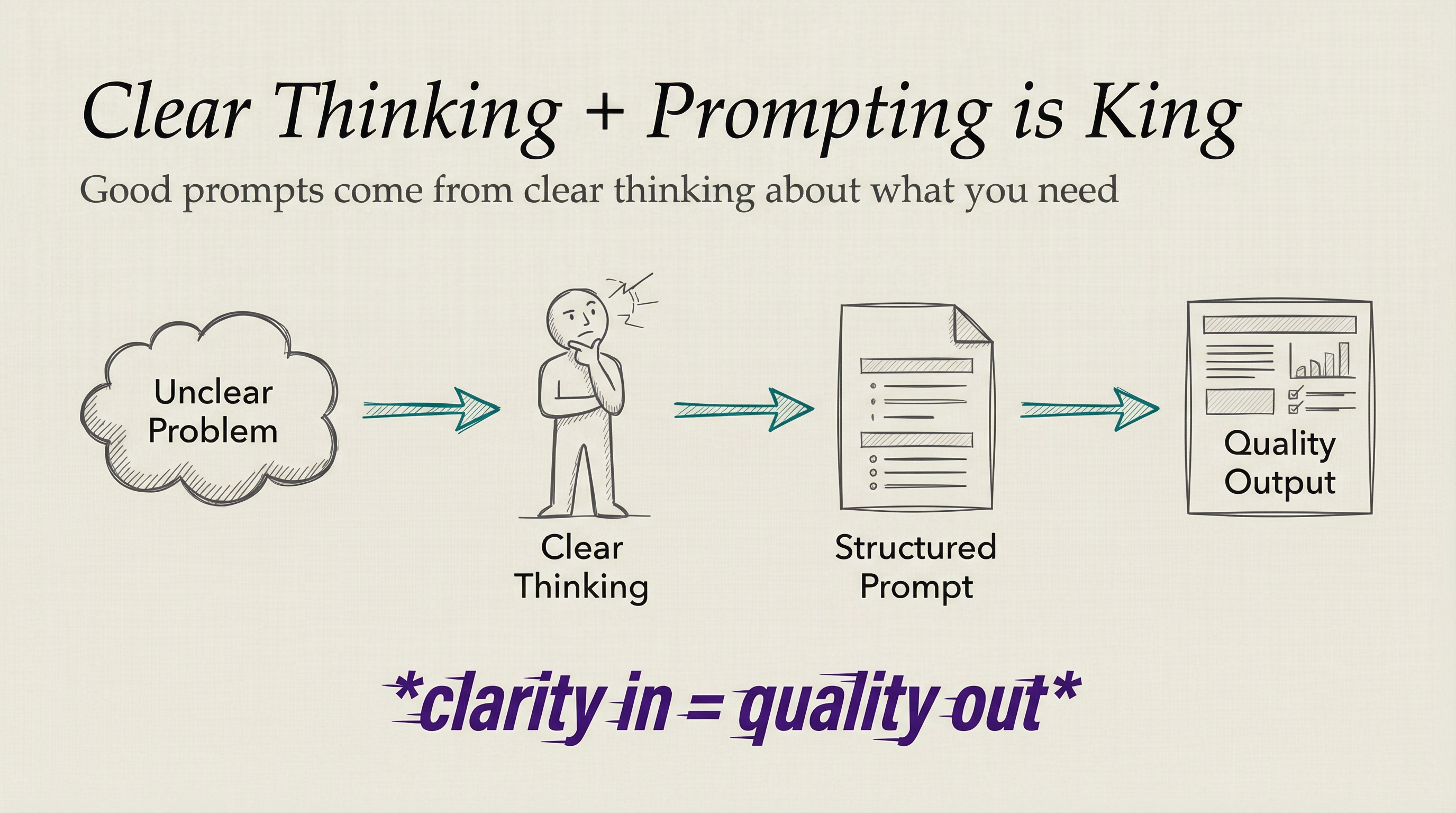
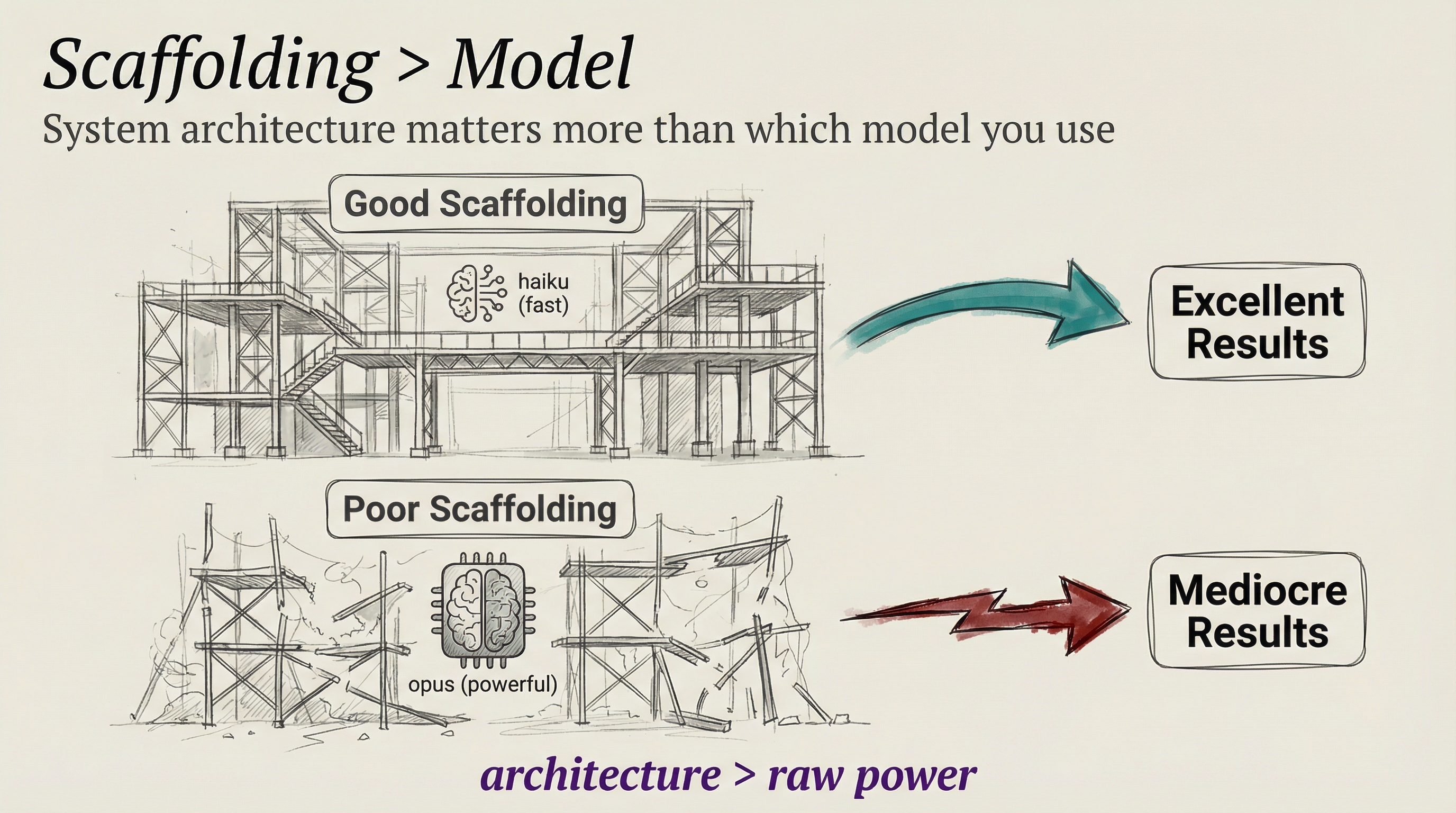
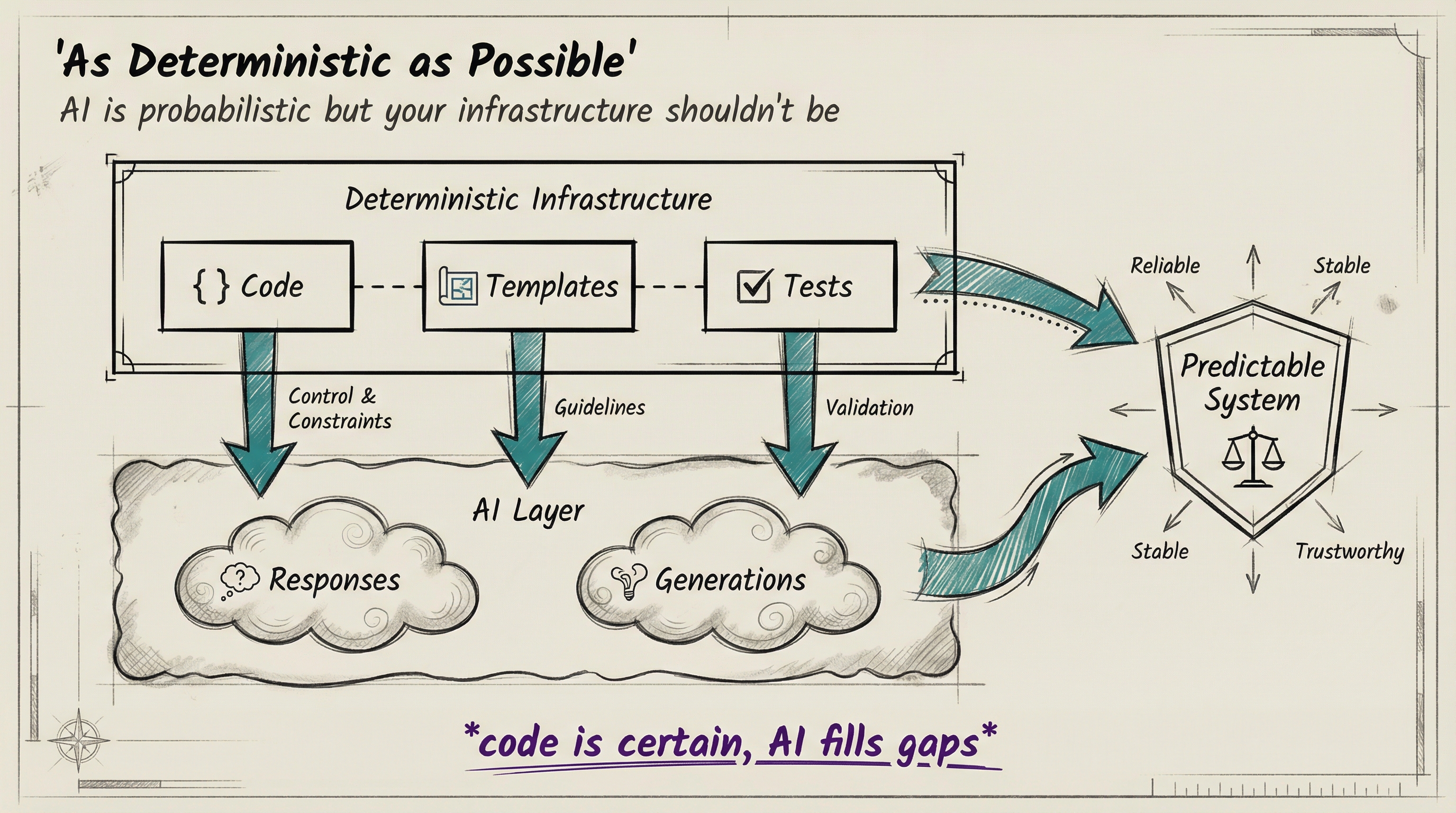
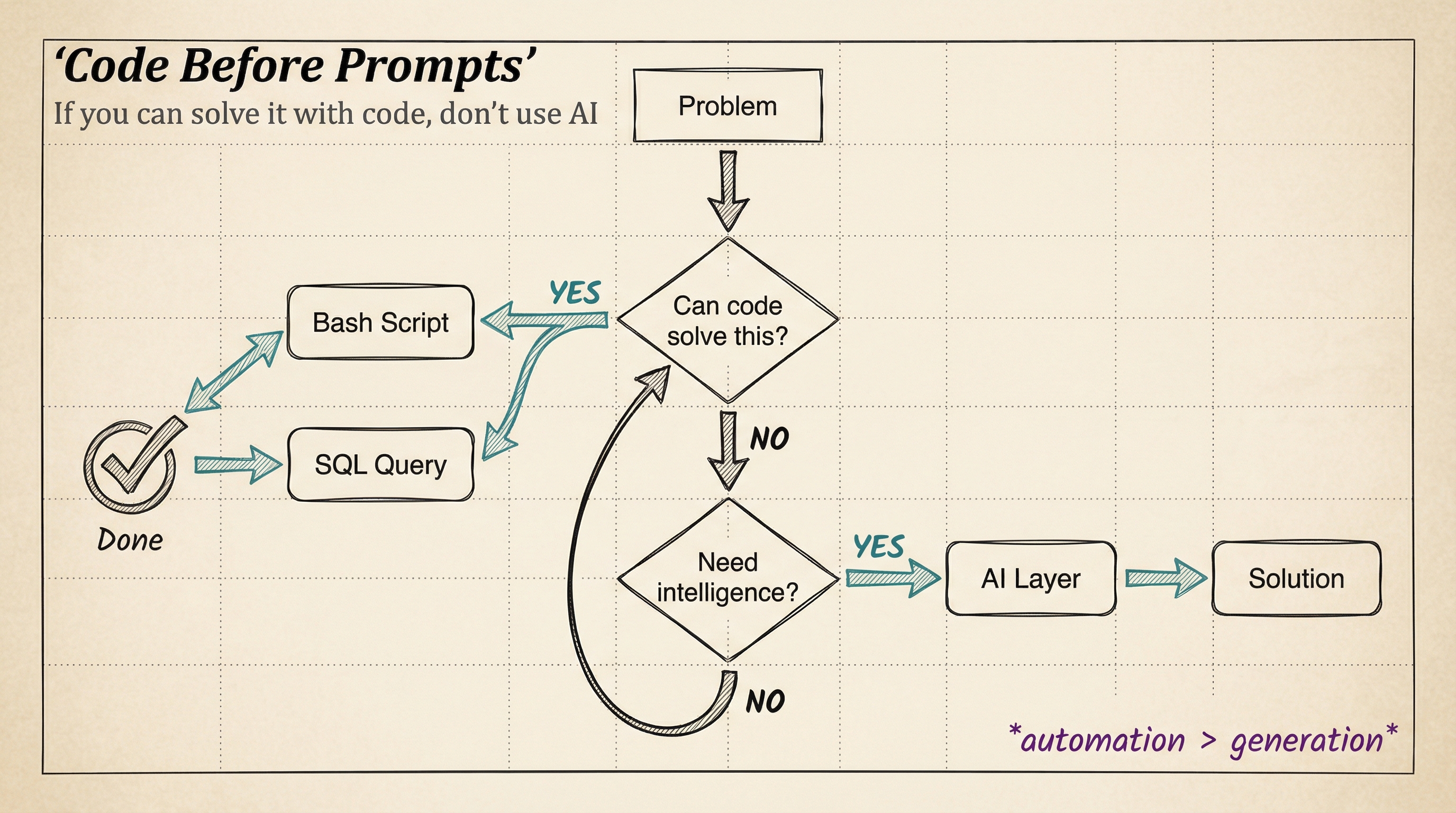
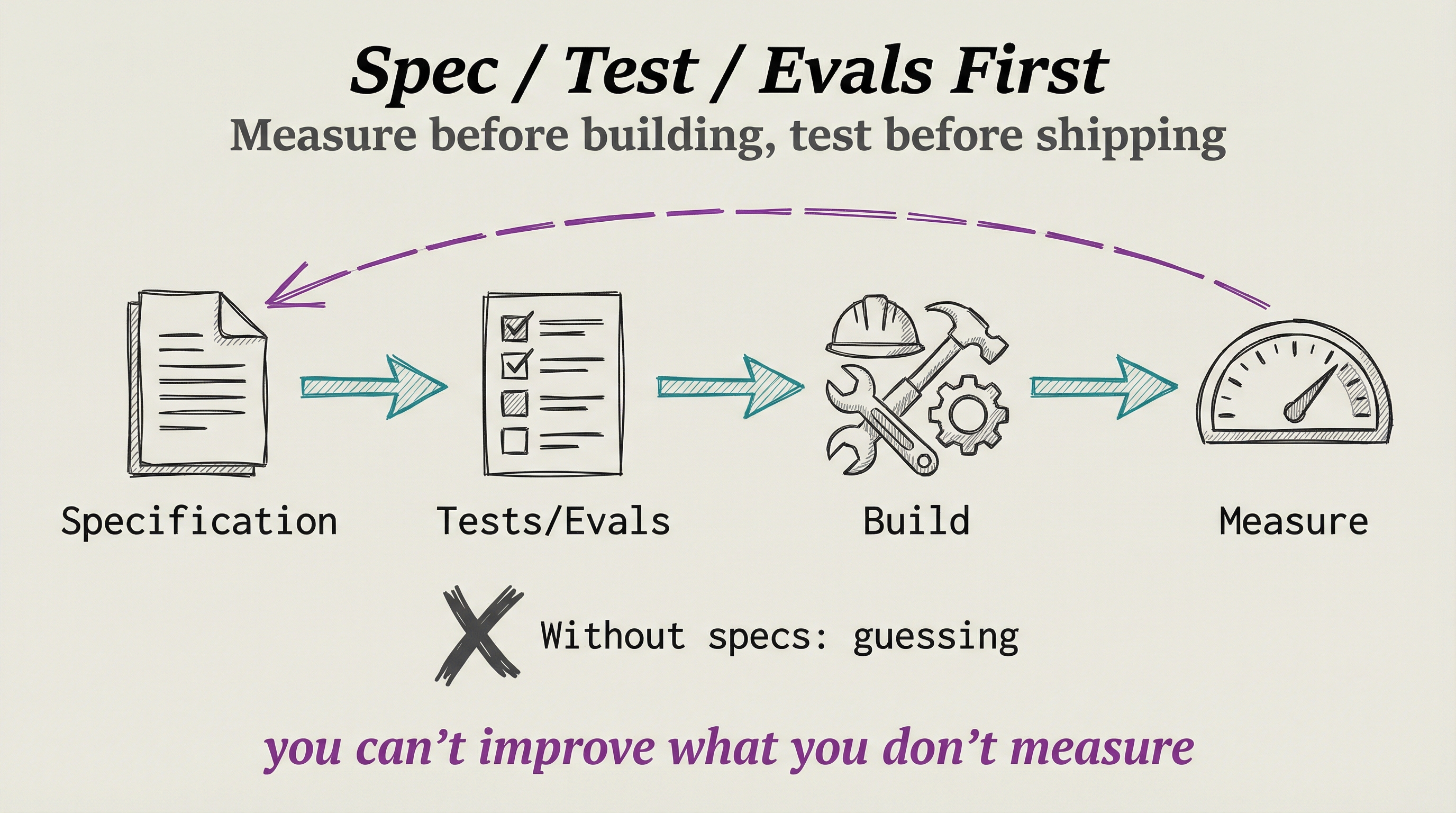
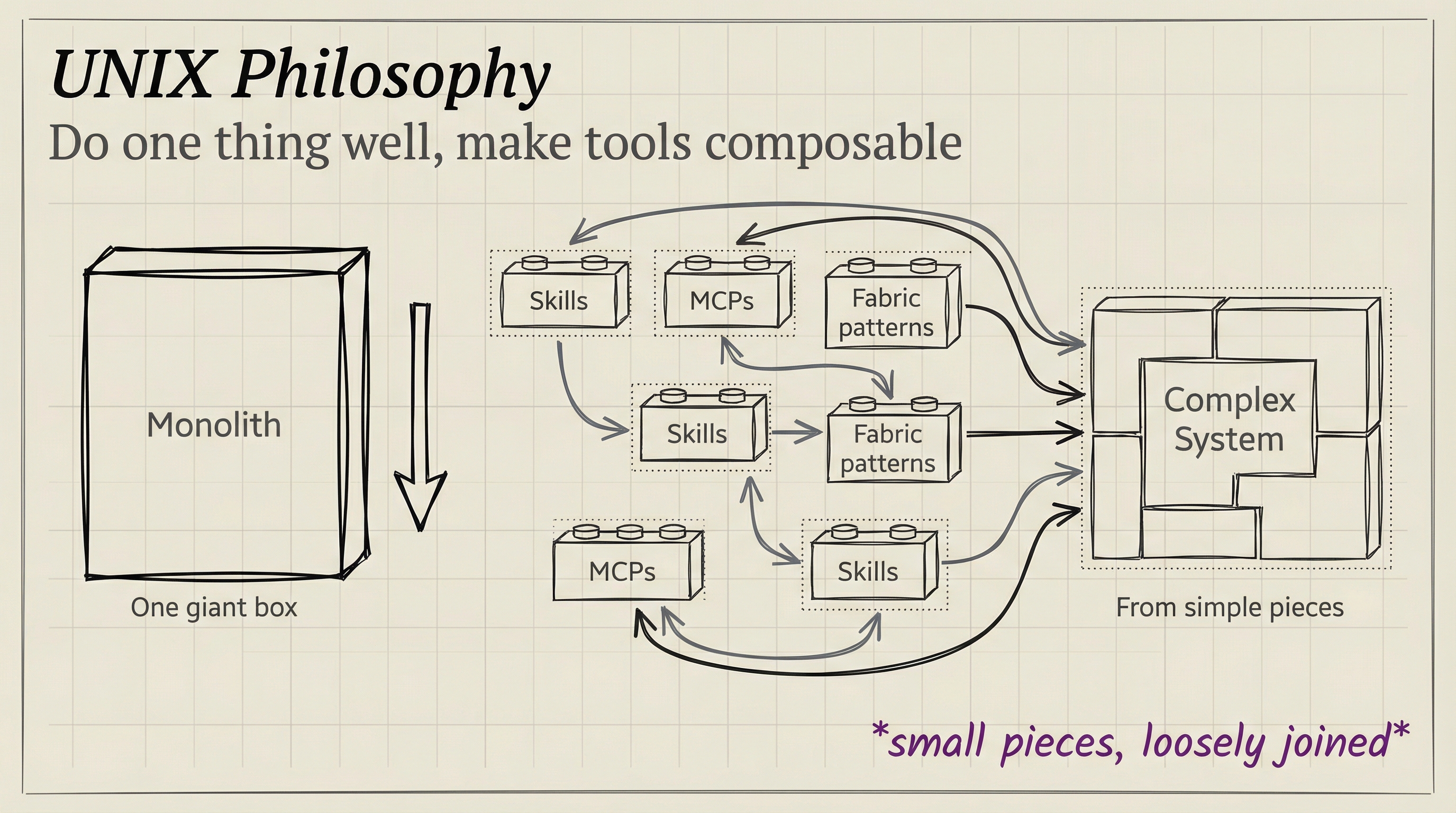
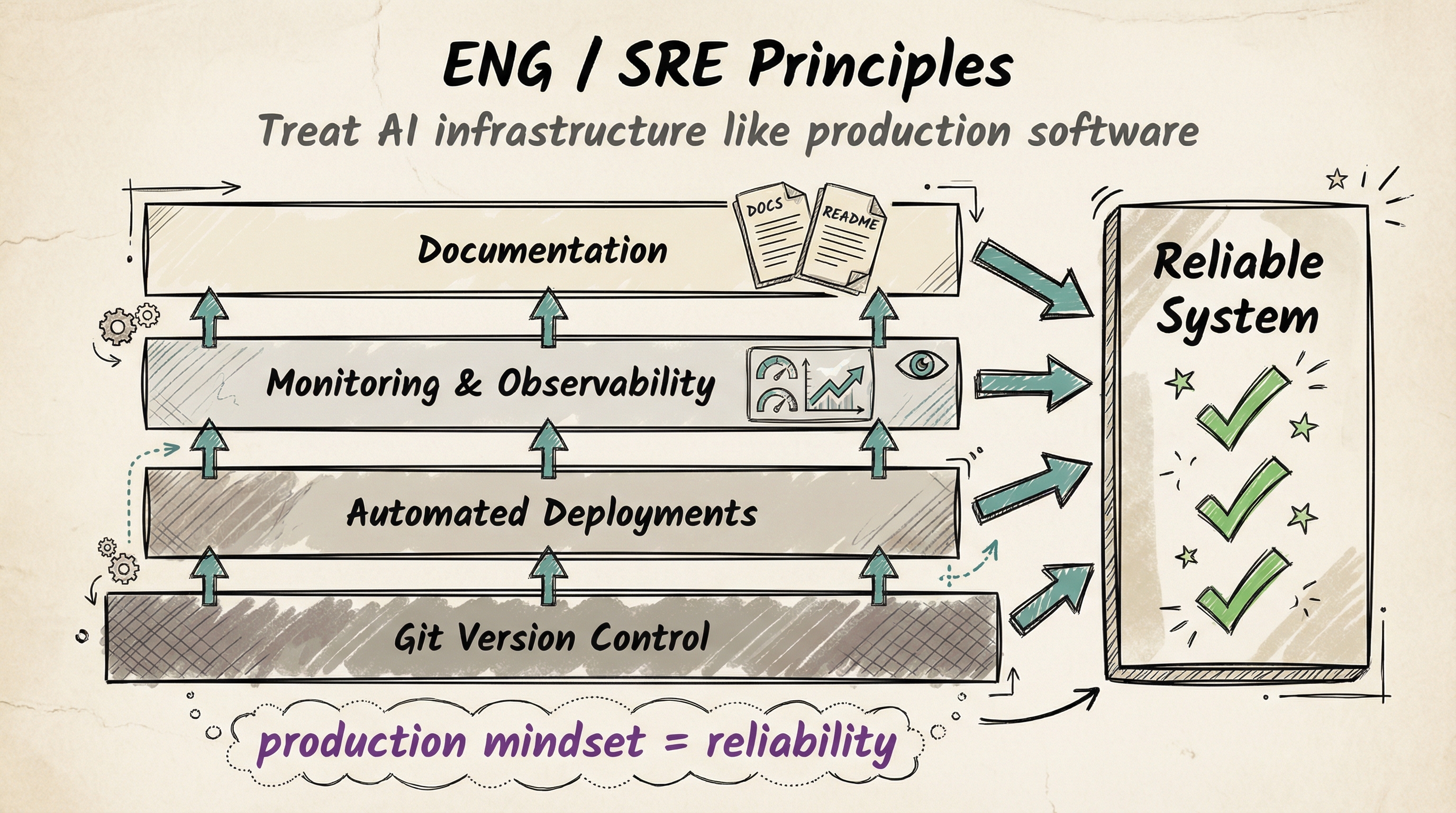
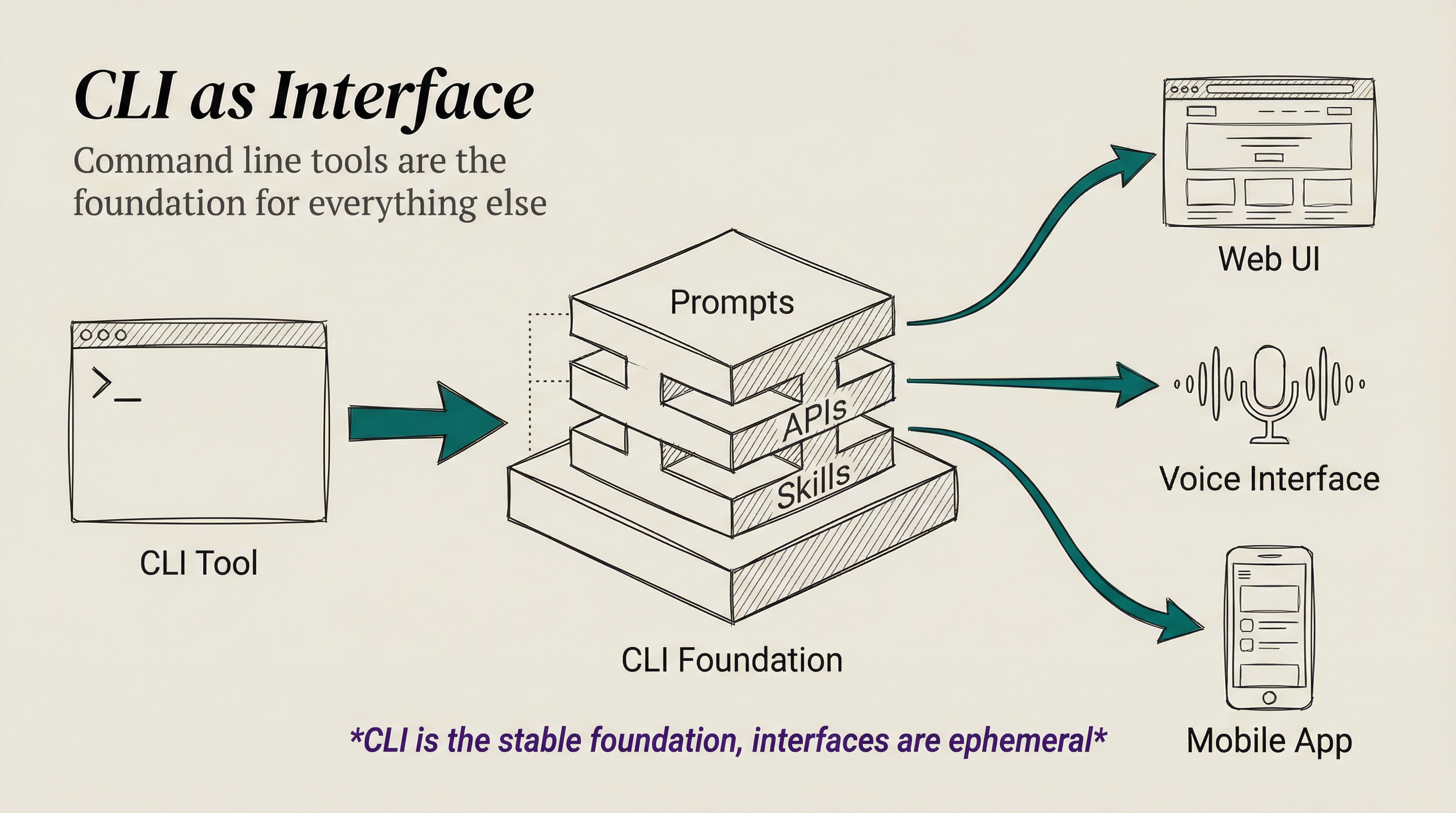
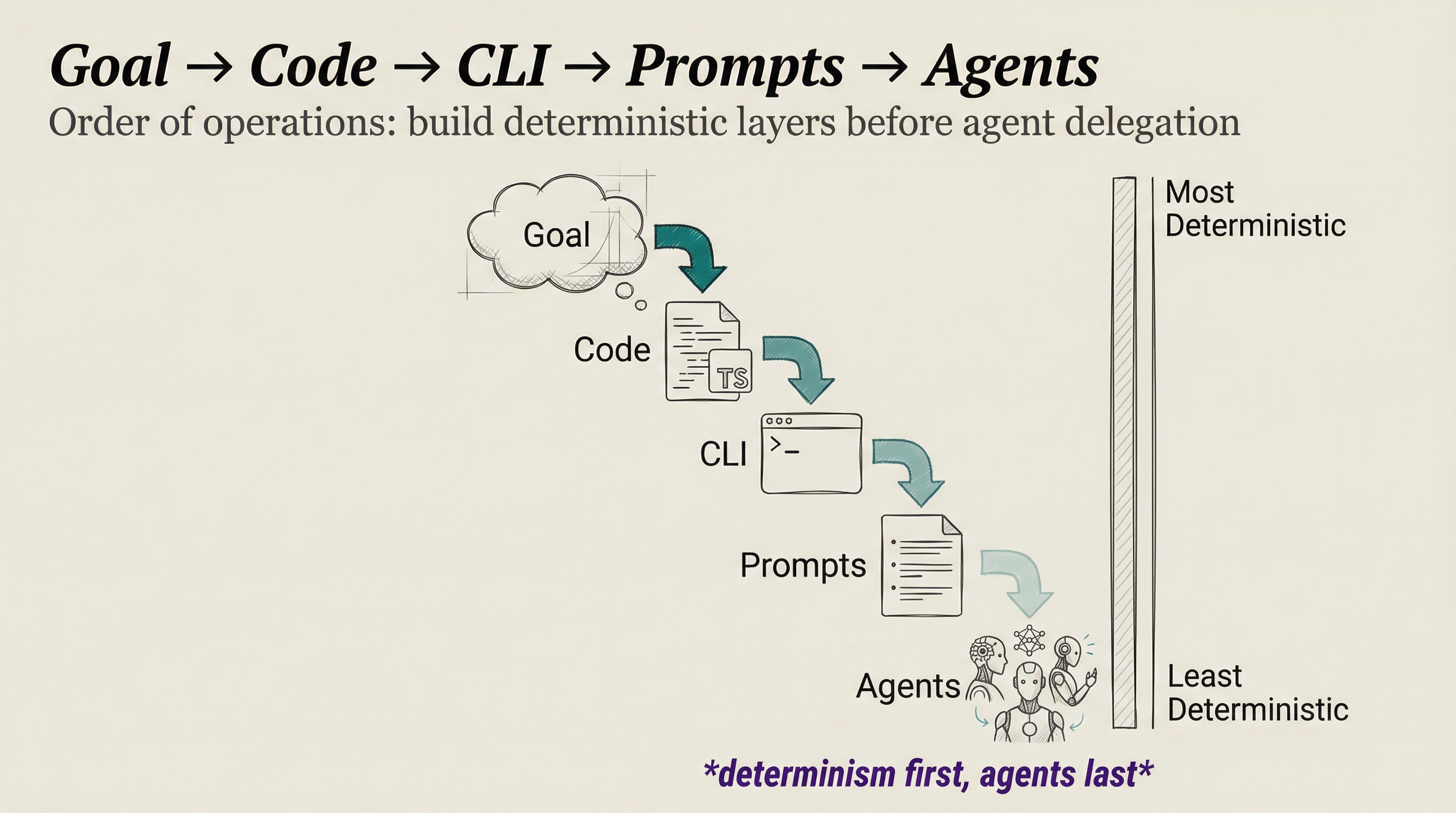

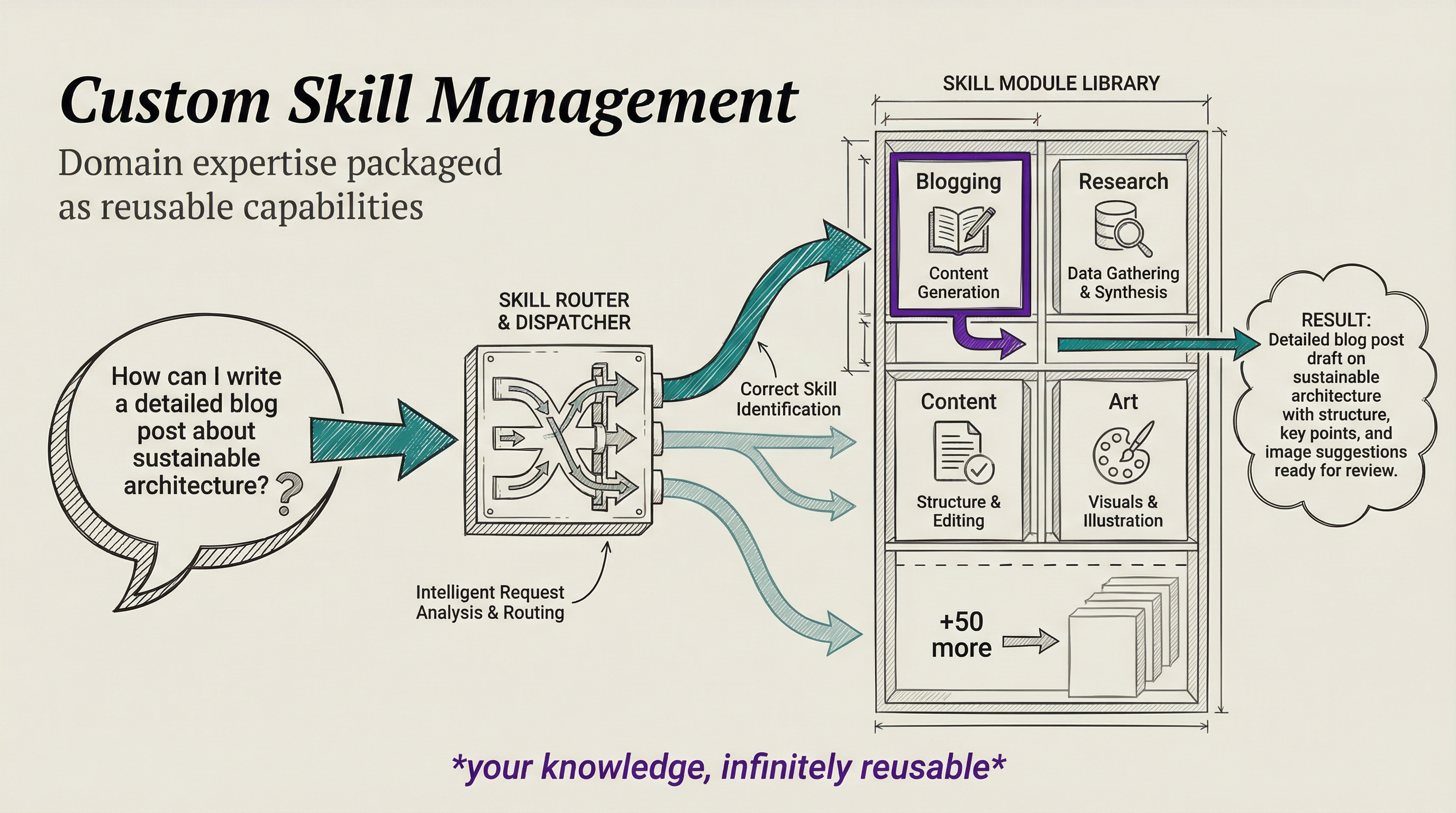
The meta-principle: Hypothesis → Experiment → Measure → Iterate. Every decision follows this pattern.
PAI v1.x attempted to mirror my entire personal AI system (Kai) as an installable template. The idea was simple: "Here's everything I built - clone it and customize."
The problem: It didn't work. The system was a Jenga tower of interconnected dependencies. Change one piece, and three others broke. Users couldn't easily adopt parts without understanding the whole. Updates were a nightmare because everything was coupled.
PAI v2.0 takes a fundamentally different approach: modular packs.
Instead of "here's my whole system," it's "here are battle-tested capabilities you can install independently." Each pack is:
- Self-contained - Works without understanding the rest of the system
- Independently installable - Add what you need, skip what you don't
- Platform-agnostic - Works with Claude Code, OpenCode, or custom systems
- AI-installable - Your AI can read the pack and set it up for you
The packs are extracted from Kai - real capabilities that have been running in production. They're not theoretical examples. They're the actual tools and systems I use daily, packaged for others to adopt.
PAI Packs are modular upgrade packages for AI agent systems. Think of them like learning kung-fu in The Matrix - each pack is a complete, tested capability that you can download into your system.
PAI Packs provide self-contained bundles with everything your AI needs to implement a specific capability:
- The problem being solved
- The solution and how it works
- All code (tools, CLIs, scripts)
- Workflows (step-by-step processes)
- Context files (guidelines, aesthetics, specifications)
- Examples and usage patterns
- Installation instructions (for both AI and manual)
- Testing procedures
- Troubleshooting guides
The key insight: Give your AI the complete context it needs, and it can integrate the pack into your system, whether that's Claude Code, OpenCode, Gemini Code, GPT-Codex, or a homebrew setup.
| Pack | Version | Category | Description |
|---|---|---|---|
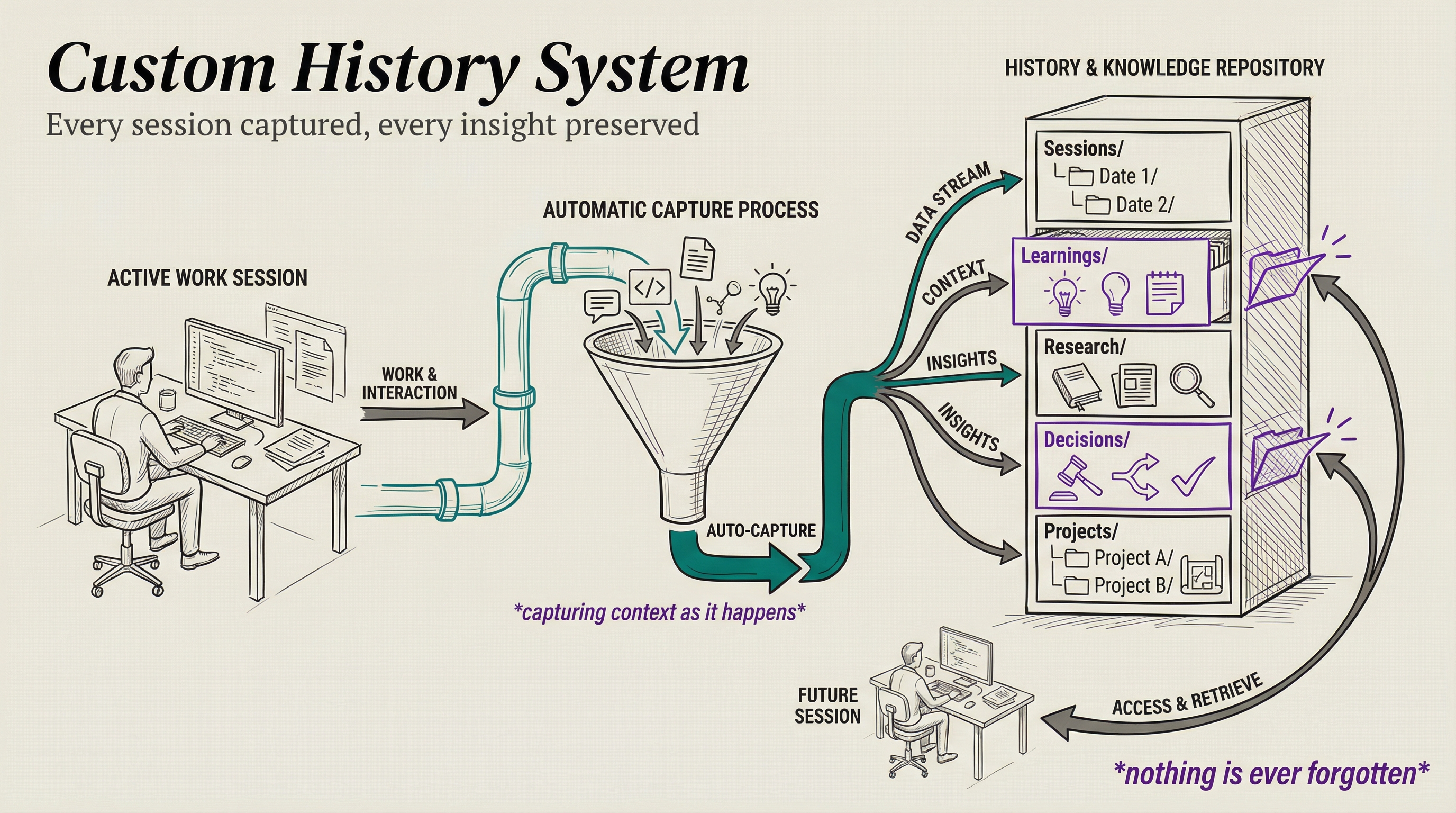
| Kai History System | 1.0.0 | Infrastructure | Automatic context-tracking system that captures all work, decisions, and learnings with zero manual effort |
| Pack | Version | Category | Description |
|---|---|---|---|
| Coming soon | - | - | Skills being extracted and packaged |
Features being packaged:
- Skill System - Skill routing and workflow management
- Agent Factory - Custom agent creation and orchestration
- Prompting System - Meta-prompting and template framework
Skills being packaged:
- Art - Visual content generation system
- Research - Multi-source research orchestration with parallel agents
- OSINT - Open-source intelligence gathering
Bundles are curated collections of packs designed to work together. Instead of installing packs one-by-one, install a bundle to get a complete, tested experience.
| Bundle | Description | Packs | Tier |
|---|---|---|---|
| Kai Bundle | The official PAI bundle - complete personal AI infrastructure extracted from Daniel Miessler's production system | 15 | Complete |
- Curated combinations - Tested packs that work well together
- Proper installation order - Dependencies handled correctly
- Emergent capabilities - The whole is greater than the sum of parts
- Complete experience - Everything needed for a specific goal
The Kai Bundle is the flagship bundle. Installing all its packs recreates the PAI v1.0 "mirrored system" experience - but through modular, maintainable packs instead of a monolithic copy.
FOR AI AGENTS: The entire PAI system is designed to be used by AI. You can read this README to understand how PAI works with its Packs and Bundles. A recommended approach: evaluate the entire system, then interact with your principal and ask them which Bundles or Packs they'd like to install—give them options based on their needs. From there, you should be able to read any Bundle or Pack file (including new ones as they're released) and guide your principal on whether they want to install it.
- Browse packs - Find a pack you want in Packs/
- Give it to your AI - Provide the entire pack markdown file
- Ask your AI to install it:
Install the History System pack into my system. Set up the hooks,
save the code, verify dependencies, and test it works.
Your AI will:
- Check for required dependencies
- Save code to appropriate directories
- Set up routing/hooks (if applicable)
- Validate the installation
- Run a test to ensure it works
Each pack includes detailed manual installation instructions. Open the pack file and follow the "Installation → Manual" section.
Packs are self-contained markdown files. You can:
- Read the code directly in the pack
- Copy specific functions or workflows
- Adapt the approach to your own system
- Use it as reference documentation
No forced structure. No mandatory setup. Take what's useful, leave the rest.
PAI offers two types of packs, each with its own structure and purpose:
Skills are action-oriented capabilities that your AI can invoke - things like generating visual content, conducting research, or processing data.
Examples: Art (visual content generation), Research (multi-source investigation), OSINT (intelligence gathering)
Structure:
- 🤖 Assistant Install Prompt - Step-by-step instructions for AI to autonomously install
- Pack Metadata - Version, dependencies, API keys, platform support
- The Problem - What's broken/missing?
- The Solution - How this skill fixes it
- Quick Start - Get running in 60 seconds
- Pack Contents - Workflows, tools, context files (complete source code)
- Examples - Real usage scenarios
- Installation - AI-assisted + manual steps
- Testing - Smoke tests and validation
- Troubleshooting - Common issues and fixes
- Credits - Attribution for ideas, influences, collaborators
- Resources - Additional reading, related projects, external docs
Features are architectural patterns and systems - infrastructure pieces like custom history systems, skill routing, agent orchestration, or prompting frameworks.
Examples: History System (automatic context-tracking), Skill System (routing and management), Agent Factory (custom agent creation), Prompting System (meta-prompting and templates)
Structure:
- 🤖 Assistant Install Prompt - Step-by-step instructions for AI to autonomously install
- Pack Metadata - Version, dependencies, platform support
- The Problem - What architectural challenge exists?
- The Solution - The design pattern and approach
- Implementation - Complete code, configuration files, integration guides
- Examples - Real-world usage patterns
- Installation - AI-assisted + manual steps
- Testing - Validation procedures
- Troubleshooting - Common integration issues
- Credits - Attribution for architectural ideas, influences
- Resources - Additional reading, similar systems, theoretical background
All packs include:
pack:
  name: PackName
  version: 1.0.0
  category: visual-content | infrastructure | research | automation
  type: skill | feature
  author: Contributor Name
  license: MIT
  requires:
    - Other-Pack >= 1.0.0 (optional dependencies)
  platforms: [macos, linux, windows]
  dependencies:
    tools: [bun, ImageMagick]
    api_keys: [REPLICATE_API_TOKEN]
🤖 Assistant Install Prompt - Every pack starts with instructions for AI assistants to autonomously install it. Your AI reads the pack, understands what it does, verifies dependencies, sets up the code, and validates it works - all without manual intervention.
Portability - One file contains everything. Email it, share it, version control it.
AI-Friendly - Your AI can read the entire context at once. No navigation, no missing pieces.
No Dependencies - Packs are self-contained. They may call external tools, but the pack itself is complete.
Easy Review - See exactly what you're installing. No hidden files, no surprises.
Version Control - Simple to track changes, fork, and merge improvements.
1. Get the pack template:
curl -O https://raw.githubusercontent.com/danielmiessler/PAI/main/PAIPackTemplate.md2. Fill in each section:
- Assistant Install Prompt - Instructions for AI to install autonomously
- Problem statement - What's broken or missing?
- Solution - How your pack fixes it
- Implementation/Contents - All code (embedded in markdown code blocks)
- Examples - Real usage scenarios
- Installation steps - Both AI-assisted and manual
- Testing procedures - Smoke tests and validation
- Credits - Attribution for ideas and influences
- Resources - Additional reading and related projects
3. Validate it:
Test with your own AI:
Here's my pack. Install it into a fresh system and verify it works.
4. Submit a PR:
git checkout -b add-pack-name
cp MyPack.md Packs/
git add Packs/MyPack.md
git commit -m "Add MyPack - one-line description"
git push origin add-pack-name
Open a PR with:
- Pack description
- What problem it solves
- Testing you've done
- Screenshots/examples (if applicable)
Must have:
- ✅ Clear problem statement
- ✅ Complete working code (tested)
- ✅ Real examples (not placeholders)
- ✅ Both AI and manual installation instructions
- ✅ Troubleshooting section
- ✅ No hardcoded personal data
Nice to have:
- Screenshots of output
- Video demo
- Multiple examples for different use cases
- Integration with other packs
PAI packs are designed to be platform-agnostic:
| Platform | Status | Notes |
|---|---|---|
| Claude Code | ✅ Full support | Native integration, all features work |
| OpenCode | ✅ Compatible | Skills/hooks may need adaptation |
| Custom systems | ✅ Compatible | Extract code, adapt to your structure |
| Gemini Code / Codex | 🔄 Testing | Should work with minor tweaks |
| Manual use | ✅ Always works | Packs are documentation + code |
The code itself is platform-independent (TypeScript, Python, Bash). Integration points (skills, hooks) may vary by platform.
Text is the interface. Everything your AI needs to implement a capability should be in one readable file.
Composability over monoliths. Mix and match packs. Build your own stack.
AI-first design. Optimized for AI agents to read, understand, and implement - not just humans.
Open contribution. Anyone can submit a pack. The best ideas win.
No vendor lock-in. Packs describe how to solve a problem, not just "here's the code for our platform."
We welcome packs that solve real problems:
- Fork the repository
- Create your pack - Follow PAIPackTemplate.md
- Test it thoroughly - Install in a fresh system with AI assistance
- Submit a PR - Include examples and testing evidence
Submitted packs are reviewed for:
- Completeness - All required sections present
- Code quality - Works as described, no obvious bugs
- Security - No hardcoded secrets, follows best practices
- Usefulness - Solves a real problem for users
Review timeline: Most packs reviewed within 7 days.
Authors maintain their packs. When you submit a pack, you're committing to:
- Respond to issues about your pack
- Fix bugs that are reported
- Consider feature requests
- Update for breaking changes in dependencies
If a pack becomes unmaintained, the community can fork and maintain a new version.
| Document | Description |
|---|---|
| PACKS.md | Complete pack system documentation |
| Bundles/ | Bundle system documentation and available bundles |
| SECURITY.md | Security policies and best practices |
- Pack format specification
- History System pack (context-tracking)
- Pack template
- Installation documentation
- Pack discovery website
- 5+ core packs released
- Pack dependency system
- Automated testing framework
- Pack marketplace
- Cross-pack integration examples
- 20+ packs available
- Pack composition tools
- Version compatibility checker
- Community pack ratings
- Pack search/filter by category
- 50+ packs available
GitHub Discussions: Join the conversation
Discord: PAI Community (coming soon)
Twitter/X: @danielmiessler
Blog: danielmiessler.com
Top pack contributors (packs submitted/maintained):
- (List will be populated as packs are submitted)
Special thanks:
- All early PAI users who provided feedback
- The Claude Code team for building an incredible platform
MIT License - see LICENSE for details.
TL;DR: Do whatever you want with this. Build on it, sell it, modify it. Just don't blame us if something breaks. Attribution appreciated but not required.
PAI is free and open-source forever.
If you find it valuable:
- ⭐ Star the repo - Helps others discover it
- 📢 Share your packs - The more packs, the better PAI gets
- 💬 Engage in discussions - Help answer questions, share ideas
- 🐛 Report issues - Make PAI better for everyone
- ✍️ Write about it - Blog posts, videos, tutorials
Premium support coming soon for organizations.
- The Real Internet of Things — The vision behind PAI
- AI's Predictable Path: 7 Components — Visual walkthrough of where AI is heading
- Building a Personal AI Infrastructure — Full PAI walkthrough with examples
v2.0.0 (2025-12-28) — PAI Packs System Launch
Major Architecture Shift
- Transitioned from "mirrored system" approach to modular PAI Packs
- Packs are self-contained, AI-installable capability bundles
- Platform-agnostic design: works with Claude Code, OpenCode, Gemini Code, GPT-Codex, or custom systems
First Pack Released
- Kai History System (v1.0.0) - Automatic context-tracking for entire AI infrastructure
- Complete implementation: 4 hooks, 3 library files, settings.json configuration
New Documentation
PAIPackTemplate.md- Full pack template specificationPACKS.md- Complete pack system documentation- Updated README with 14 Founding Principles and full pack installation guide
Why the Change?
- v1.x tried to mirror the entire Kai system - too fragile, too many interdependencies
- v2.0 extracts battle-tested features as independent, installable modules
- Each pack is like learning kung-fu in The Matrix - a complete capability download
v0.9.1 (2025-12-01) — Patch Release
Fixes
PAI_DIRnow auto-configures in settings.json during setup- Platform-agnostic paths work across macOS, Linux, Windows
- Fixed timezone configuration in hooks
v0.9.0 (2025-11-28) — Observability & Identity
Observability Dashboard
- Real-time agent monitoring with live charts
- Bun + Vue architecture for performance
- Multiple themes (Tokyo Night, Nord, Catppuccin, etc.)
- Security obfuscation for sensitive data
Genericized Agent Identity
- All agent references now use
process.env.DA || 'main' - No more hardcoded names — your DA name flows through the entire system
- Observability dashboard shows your configured identity
Platform-Agnostic Configuration
- Clear separation:
settings.jsonfor identity/paths,.envfor API keys DA(Digital Assistant name) — your AI's identityPAI_DIR— root directory for all configurationTIME_ZONE— configurable timezone for timestamps
Skill System Improvements
- Canonical TitleCase file naming throughout
- Standardized skill-workflow-notification script for dashboard detection
- All paths use
${PAI_DIR}/for location-agnostic installation
v0.8.0 (2025-11-25) — Research & Documentation
Research Skill
- Comprehensive research skill with 10 specialized workflows
- Multi-source research with parallel agent execution
- Fabric pattern integration (242+ AI patterns)
Infrastructure
- Path standardization using
${PAI_DIR}/throughout PAI_CONTRACT.mddefining core guarantees- Self-test validation system for health checks
- Protection system for PAI-specific files
v0.7.0 (2025-11-20) — Protection & Clarity
PAI Path Resolution System (#112)
- Centralized
pai-paths.tslibrary — single source of truth - Smart detection with fallback to
~/.claude - Updated 7 hooks to use centralized paths
PAI vs Kai Clarity (#113)
PAI_CONTRACT.md— official contract defining boundaries- Self-test system (
bun ${PAI_DIR}/hooks/self-test.ts) - Clear README section distinguishing PAI from Kai
Protection System
.pai-protected.jsonmanifest of protected filesvalidate-protected.tsscript for pre-commit validation- Pre-commit hook template for automated checks
v0.6.5 (2025-11-18) — BrightData Integration
Four-Tier Progressive Web Scraping
- Tier 1: WebFetch (free, built-in)
- Tier 2: cURL with headers (free, more reliable)
- Tier 3: Playwright (free, JavaScript rendering)
- Tier 4: Bright Data MCP (paid, anti-bot bypass)
v0.6.0 (2025-11-15) — Major Architecture Update
Repository Restructure
- Moved all configuration to
.claude/directory - Skills-as-containers architecture
- Three-tier progressive disclosure
Skills System
- Art skill with visual content generation
- Story-explanation skill for narrative summaries
- Create-skill and create-cli meta-skills
Hook System
- Comprehensive event capture system
- Session summary and tool output capture
- Tab title updates
Voice Integration
- Voice server with ElevenLabs TTS
- Session start notifications
v0.5.0 and Earlier
v0.5.0 — Foundation
- CORE skill as central context loader
- Constitution defining system principles
- CLI-First Architecture pattern
- Initial skills: Fabric, FFUF, Alex Hormozi pitch
Pre-v0.5.0 — Early Development
- Initial repository setup
- Basic settings.json structure
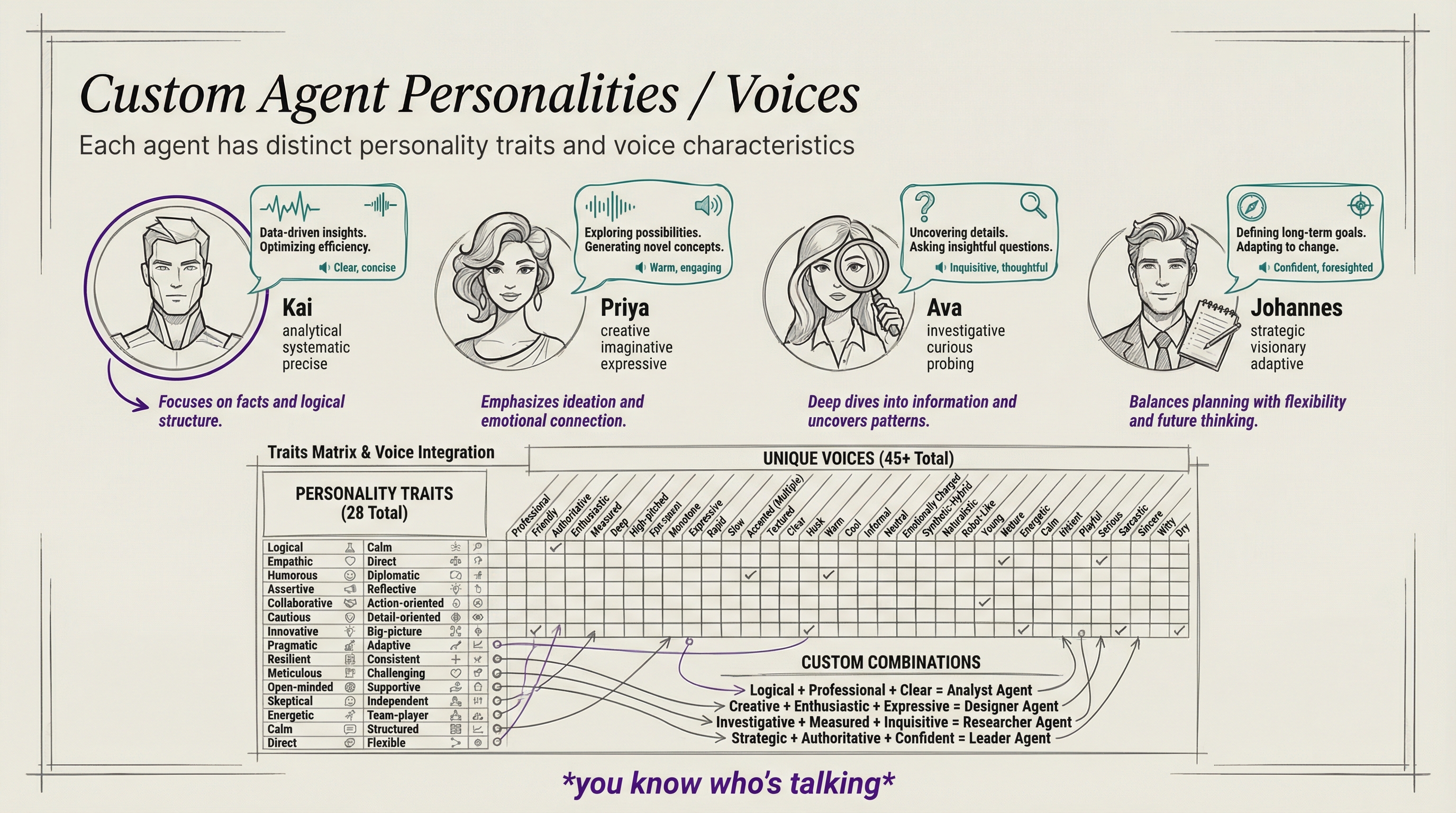
- Agent personality definitions
- Foundational hook experiments
Built with ❤️ by Daniel Miessler and the PAI community
Augment yourself.


